

The Munter Hitch: How to Belay without a Belay Device
Uses:
– Belaying without a belay device
– Abseiling without a belay device
– Creating a releasable knot when escaping the belay
The munter (Italian) hitch tends to ‘kink’ the rope when used for abseiling or belaying. It can also cause slight abrasion to the rope’s sheath, especially if the leader falls.
It is a useful skill to know, but is not intended for long-term use.
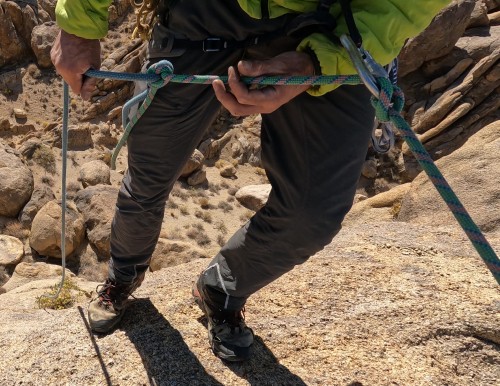
How to Tie the Munter Hitch
Step 1
Clip the rope through a large, pear-shaped (HMS) screwgate. Smaller screwgates work too, but will make belaying more difficult.
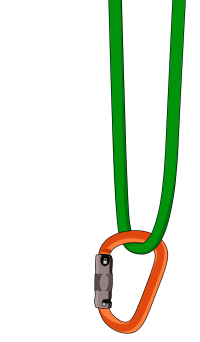
Step 2
Twist a loop in the climber’s end of the rope as shown.
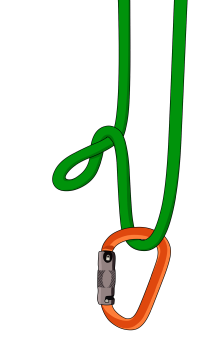
Step 3
Clip the loop into the screwgate.
Step 4
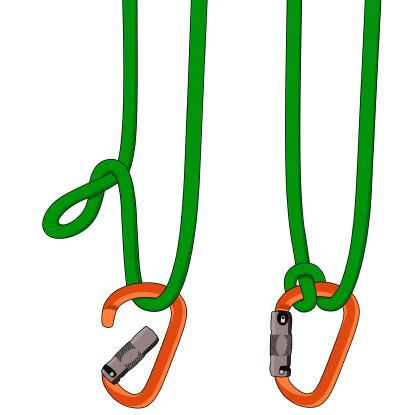
Clip the carabiner to your belay loop and fasten the screwgate.
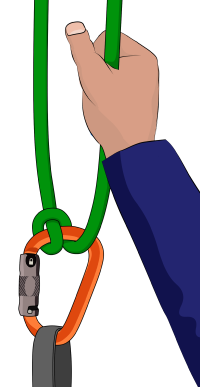
Warning!
Make sure the brake strand is on the ‘spine’ of the screwgate. If the brake strand is on the ‘gate’ side, it could rub against the gate and potentially open it.
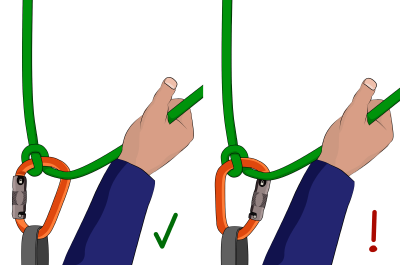
Step 5
Test the knot by pulling tight on either end of the rope. The knot should flip through the carabiner easily both ways.
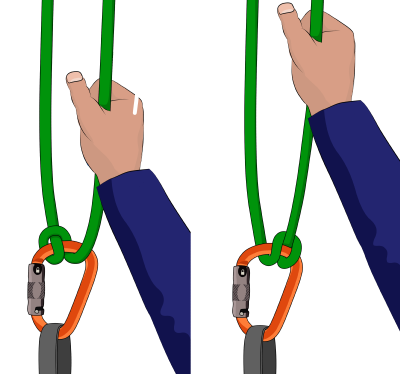
Belaying with a Munter Hitch
Belaying with a munter hitch is similar to using an ATC: you must keep hold of the brake rope at all times. The main difference is that you ‘lock-off’ in the opposite direction (see below). This goes against a climber’s natural reaction, so make sure to practise this technique well before using it.
When bringing your partner up on a munter hitch, it’s easier to belay directly from the anchor (if your anchor setup allows), rather than from your harness.
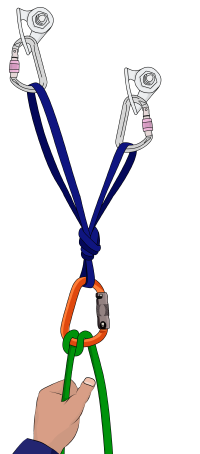
Locking Off
The Munter hitch creates a lot of friction. Depending on the situation (rope thickness, weight of climber, rope drag, etc..), it can be locked off in any direction. However, for maximum friction, you must hold the brake rope forward (so that both strands of rope are parallel to each other).
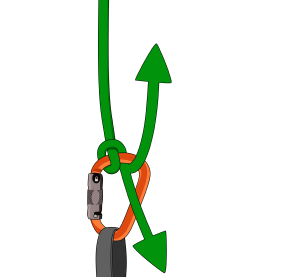
Giving Slack
Hold the brake rope loosely and pull through slack rope, similar to giving slack with an ATC.
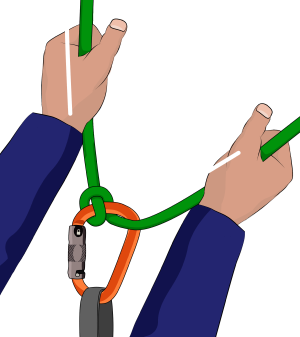
Taking In
Pull the brake rope so that the knot ‘flips’. More rope can now be taken in by continuing to pull rope through forwards.
Lowering
Lock the rope off in the maximum friction position described above. Slowly move the rope back and lower as you would with an ATC. It can be tricky to find the ‘sweet spot’, so make sure to move position slowly.
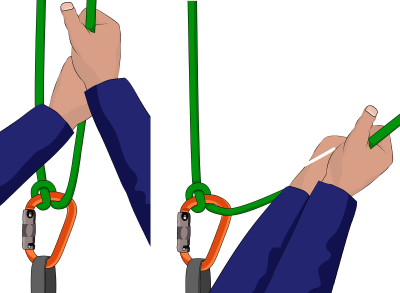
The Munter-Mule-Overhand
Uses:
– Tying off a munter hitch when belaying or escaping the system.
Step 1
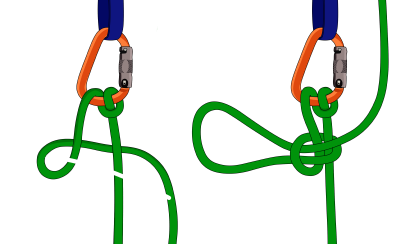
Form a loop in the brake-strand of rope as shown.
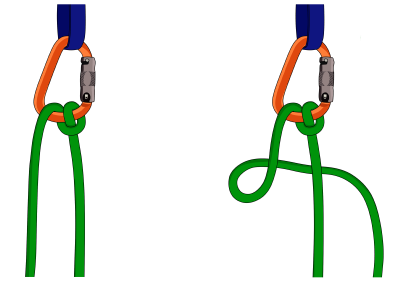
Step 2
Feed a bight of the brake rope around the climber’s rope and through the loop as shown.
Pull the knot tight, either by easing the climber’s weight onto the rope if they are weighting it, or by pulling up on the climber’s strand of rope if they’re not weighting it. The munter hitch is now tied-off, but not backed-up (see next step).
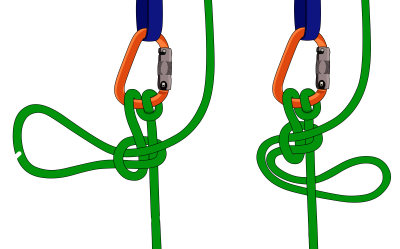
Step 3
To complete the knot, you must back it up. One way of doing this is to tie an overhand around the climber’s strand of rope. To start, wrap the loop around the back of the rope.
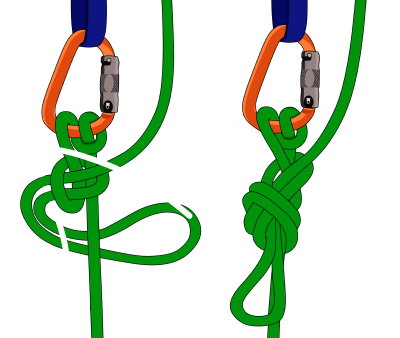
Step 4
Then feed it back through as shown.
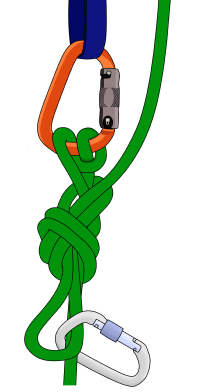
Step 5
A carabiner completes the hands-free munter-mule-overhand.
Releasing the Munter-Mule-Overhand
Unfasten the overhand knot Then pull forwards on the brake strand of rope until the knot pops free.
If the rope is weighted, you can expect a few centimetres of rope to slip through the munter hitch. Prepare for this by holding the brake strand tight with both hands.
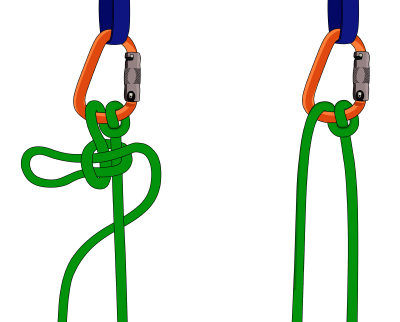
Munter Hitch Belaying: Top Tips
When using a small diameter rope, it’s worth using two carabiners to increase belay friction.
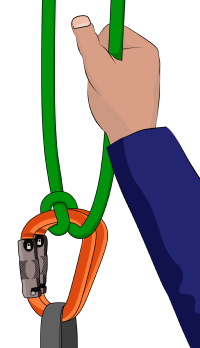
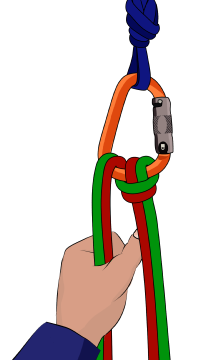
To belay the follower with half ropes, you can treat them as one and tie them together in the same munter hitch. If you need to pull one rope through faster than the other, you should use two separate knots (see next tip) instead.
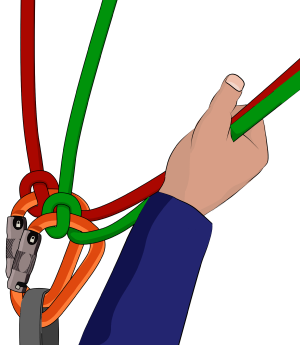
To lead belay with half ropes, you’ll need to use two separate screwgates with a munter hitch on each. This can be difficult at first, especially giving slack on one rope while simultaneously taking in the other. Practice well before you use this technique.
Related Topics


The article above is part of the book – The Trad Climber’s Guide To Problem Solving
E-book (pay what you want)
Paperback
Kindle
Free Sample
Learn how to:
– Use a variety of self-rescue techniques
– Build self-equalizing anchors with minimal gear
– Abseil without a belay device
– Abseil with damaged ropes
– Descend from bad anchors
– Negotiate loose rock
– Use basic aid techniques
– Simul-climb safely
– Prevent accidents from occurring in the first place
Plus much more.