
Safe Simul Climbing
Safe Simul Climbing What is Simul Climbing? Simul climbing is a technique where all climbers move at the same time while tied into the same rope. Protection is placed by the first climber and removed…
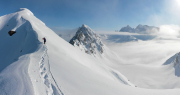
Safe Simul Climbing What is Simul Climbing? Simul climbing is a technique where all climbers move at the same time while tied into the same rope. Protection is placed by the first climber and removed…
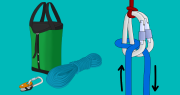
Improvised Hauling * This article is about using improvised basic hauling techniques while trad climbing. To learn more about hauling on big walls, see this article. Hauling a bag on a separate rope can be…
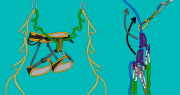
Improvised Aid Climbing * This article is about using improvised basic aid techniques while trad climbing. To learn more about aid climbing on big walls, see these articles. Using protection pieces as hand or foot…
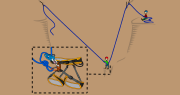
Pendulums and Tension Traverses What are Pendulums and Tension Traverses? Pendulums and tension traverses are great techniques for moving sideways across a section which is too difficult to climb. A pendulum involves swinging across the…
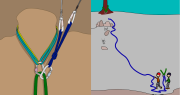
Abseiling: Bad Anchors and Loose Rock Poor abseil anchors are often found on seldom travelled multi-pitch descents or alpine ridge traverses. Sometimes there is no anchor where you need one, or the existing anchor is…
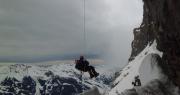
Abseiling: How to Deal with Stuck Ropes You try to retrieve your ropes after abseiling and they get stuck. What do you do? Preventing Stuck Ropes If you are about to abseil down complex terrain,…
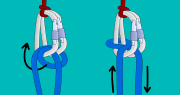
Rock Climbing Knots: The Garda Hitch (Alpine Clutch) The garda hitch uses two parallel carabiners to create a system where a loaded rope can move in one direction but not the other. Uses:– As an…
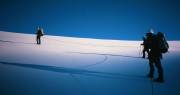
Glacier Travel Fundamentals Travelling on a glacier is an exciting element of exploring the high mountains. Many alpine rock climbs can only be accessed by travelling across glaciers, or the glacier itself may be the…
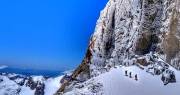
Glacier Gear What gear you take on the glacier will depend entirely on what you plan to do once across it. The list below covers equipment that is recommended for the glacier crossing itself. You…
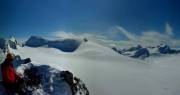
Glacier Travel: Using the Rope It can be tempting to cross a glacier without bothering to get the rope out, especially if it looks easy or if other climbers have crossed without problems before. This…
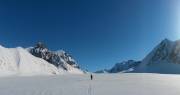
Glacier Travel: Moving on Snow Walking on Snow The snow which covers a glacier is very variable. Sometimes a 20 degree slope is easy to walk up, with the front team member kicking in steps…
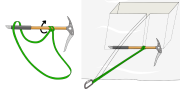
Crevasse Rescue: Snow Anchors You will need to make an anchor on the glacier when:– Performing a crevasse rescue– Belaying/ abseiling across a crevasse or other tricky ground NoteThe anchors described in this section are…
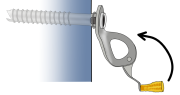
Crevasse Rescue: Ice Anchors How to Place Ice Screws You can place ice screws to make an anchor on a dry glacier, or you might be able to dig through snow on a wet glacier…
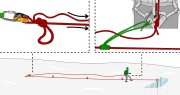
Crevasse Rescue: Raising Systems Setting up a ‘raising system’ means using your rope and gear to pull your partner out of a crevasse. How to Set Up a Raising System Step 1The first and most…
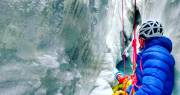
Crevasse Rescue: Prusiking Falling into the dark, icy depths of a crevasse sounds like a scene from a bad movie or a worst nightmare. But this is a real risk when travelling across a glacier,…