What is Big Wall and Aid Climbing?
On this page, you will learn:
- What big walls are.
- What aid climbing is.
- How the whole thing works (leading, hauling, jumaring, etc.).
Video version:
What is Big Wall Climbing?
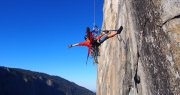
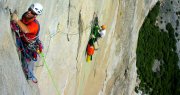
Big wall climbing is a guaranteed adventure. A big wall is essentially a vertical expanse of rock which is too big to climb in a single day. Food, water and other gear is taken up in a haul bag. Nights are spent sleeping on a portaledge, or a natural rock ledge, thousands of feet off the ground. Unless you’re a very good free climber, most routes require aid climbing to reach the summit.
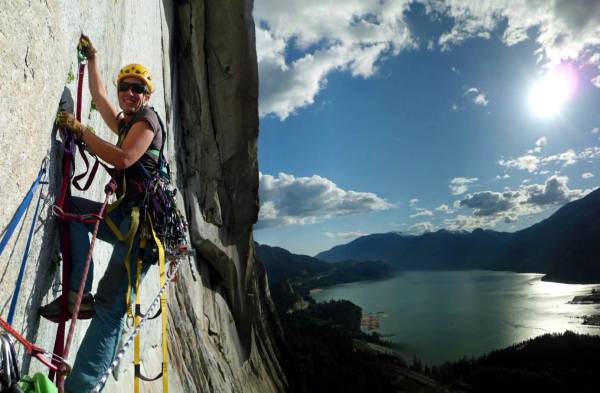
Due to their length, steepness and complexity, big walls present a multitude of mental and physical challenges which you are unlikely to encounter in other disciplines of climbing. Easier big walls, such as the Regular Northwest Face of Half Dome, are routinely climbed in a day by climbers with chalk bags instead of haul bags. Whereas, an obscure, aid-intensive route on the same wall may take a highly experienced team over two weeks to complete.
Big walls aren’t that common – the most famous, and accessible, is El Capitan in Yosemite, although there are many more in remote locations such as Baffin Island and Patagonia. Learn more about where big walls are in this article.
The Big Wall Climbing System
Leading
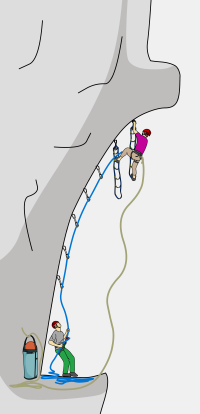
The leader ascends a pitch by aiding, free climbing, or both. They trail a haul line with them which is clipped to the back of their harness.
Belay Setup
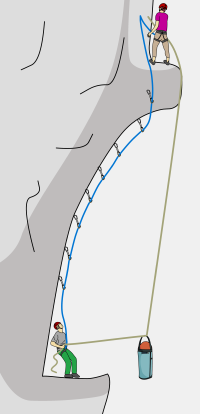
At the end of the pitch, the leader sets up the belay and hauling system. The follower releases the haulbag from the lower belay and the leader begins pulling it up.
Hauling and Jumaring
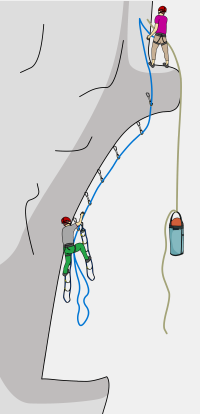
Normally, the leader does not belay their partner up. Instead, they ‘fix’ the lead rope so the follower can ascend it.
The leader continues to haul the bag while their partner jumars up the fixed lead line, removing all the protection as they go. Once both climbers and the haul bag are at the top belay, the system can be repeated again.
What is Aid Climbing?
Aid climbing is the process of using gear to support your weight as you ascend. You attach fabric ladders (etriers) to gear and then step up them to gain height.
Conversely, free climbing is the term given to using your hands and feet to climb the rock and placing gear to protect from falling. This gear is not weighted unless you fall (you probably just call this ‘climbing’).
A knowledge of aid techniques allows you to climb routes which are way beyond your free climbing abilities. Aid climbing also has its own unique set of skills and problems that can be just as fun as free climbing. Beginner aid routes typically involve using the same trad protection (nuts, cams, etc..) that you’re already familiar with. More specialist aid gear (such as pitons and copperheads) is needed if you advance to harder routes.
Aid climbing is a useful skill to have even if you have no intention of climbing a big wall. Many alpine routes have sections that, in poor weather, may be impossible without using aid. Just a few aid moves may be all that is needed to reach a summit or a safer descent. Knowledge of aid techniques can also provide a way to safely move up or down a crag in an emergency.
Can I Climb a Big Wall?
Absolutely! The prospect of climbing a multi-day wall can be overwhelming, but when each part of the process is broken down into bite-size pieces, it becomes more of a realistic goal. Aid climbing, jumaring and hauling are all fairly straightforward skills to learn and well within the reach of any experienced trad climber.
The important part is to go outside and practise. If you put the effort into getting these skills dialed, you’ll have a great experience on the wall.
Big Wall Climbing Etiquette
The rules on a big wall are very similar to those at any other crag. Generally, it all comes down to being polite, respecting other climbers and having common sense. Here are some basic etiquette guidelines:
- Don’t add extra bolts, rivets or bat-hook holes to existing routes (replacing old bolts and rivets is good though).
- Don’t chip holds or enhance placements.
- Use clean aid where possible.
- If other climbers arrive at a route before you, they get to climb first.
- If you’re moving slow, it is polite to allow faster teams to pass.
- Take your litter and human waste home.