
Safe Simul Climbing
Safe Simul Climbing Simul climbing is a technique where all climbers move at the same time while tied into the same rope. Protection is placed by the first climber and removed by the last. This…
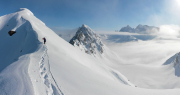
Safe Simul Climbing Simul climbing is a technique where all climbers move at the same time while tied into the same rope. Protection is placed by the first climber and removed by the last. This…
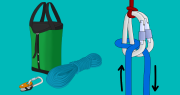
Improvised Hauling * This article is about using improvised basic hauling techniques while trad climbing. To learn more about hauling on big walls, see our article here. Hauling a bag on a separate rope can…
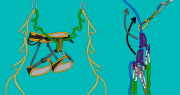
Improvised Aid Climbing * This article is about using improvised basic aid techniques while trad climbing. To learn more about aid climbing on big walls, see our articles here. Using protection pieces as hand or…
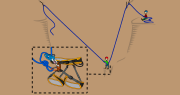
Leading > Pendulums and Tension Traverses Pendulums and tension traverses are great techniques for moving sideways across a section which is too difficult to climb. A pendulum involves swinging across the wall to reach a…

Climbing on Loose Rock and Runout Routes Accidents involving loose rock fall into three main categories:1) Belayers being hit by rocks from the leader2) Leaders falling because they held/ stood on loose rock3) Being hit…
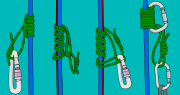
Prusik Knots > Different Types Explained A prusik (also known as a friction hitch) is a short piece of cord which can be wrapped around your climbing rope to add friction. They can slide up…
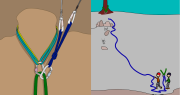
Abseiling > Bad Anchors and Loose Rock Poor abseil anchors are often found on seldom travelled multi-pitch descents or alpine ridge traverses. Sometimes there is no anchor where you need one, or the existing anchor…
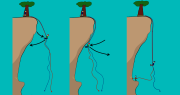
Abseiling > Pendulums Multi-pitch descents are not always straightforward. The next abseil station may be far to the side of the previous one (they often are when descending loose ground). Or maybe you need to…

Abseiling > How To Increase Friction Whether you’re abseiling down a skinny rope at the sport crag, or retreating down a multipitch with rain-slicked ropes and a heavy pack, the following techniques will help you…
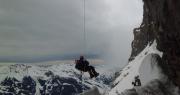
Abseiling > How to Deal with Stuck Ropes You try to retrieve your ropes after abseiling and they get stuck. What do you do? Stuck Ropes – Prevention If you are about to abseil down…

The Carabiner Brake – How To Abseil Without a Device Dropping your belay device at the top of a ten-pitch abseil descent isn’t recommended. But if you do, knowing how to use the carabiner brake…
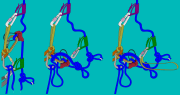
Abseiling > How To Abseil Past a Knot Times when you might need to abseil past a knot:– When descending a single strand ‘fixed’ rope, where a knot has been tied to isolate a damaged…

Abseiling > How To Abseil with a Damaged Rope If you climb long enough, you will inevitably end up having to abseil with a damaged rope at some point. Unfortunately, getting a core-shot (when the…
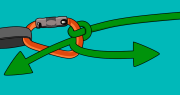
The Munter Hitch > How To Belay Without a Belay Device Uses:– Belaying without a belay device– Abseiling without a belay device– Creating a releasable knot when escaping the belay The munter hitch tends to…
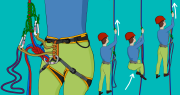
Self Rescue > Prusiking Up a Rope Knowing how to prusik up a rope transforms a potential epic into a mere inconvenience. This article explains how to ascend a rope using prusiks, assuming that you…
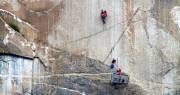
Self Rescue > Rope Soloing Rope soloing is a technique where you belay yourself instead of being belayed by your partner. You can use this technique to lead or top rope belay. More complicated techniques…
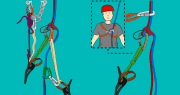
Self Rescue > Tandem Abseiling Tandem abseiling means two people descending with the same device. It is most useful when descending with an injured climber. A simple tandem abseil setup:– ‘Lead’ abseiler is attached to…
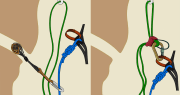
Self Rescue > Mid-Pitch Retreat Sometimes, a climb may prove to be too difficult, forcing you into a mid-pitch retreat. This is fairly straightforward if you:– Can downclimb– Are less than half a rope length…
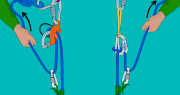
Self Rescue > Hauling Your Partner This section describes methods of hauling your partner up part of a climb. Times when you may need to set up a hauling system include:– Assisting your partner through…
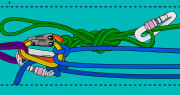
Self Rescue > Escaping the Belay The belay escape is a technique whereby the belayer frees themselves from the responsibilities of belaying. This fundamental skill is necessary for many rescue situations. Situations when you may…
Self Rescue > Introduction Having a good knowledge of self-rescue skills is essential for any climber. The more effectively you are able to improve a poor situation (e.g; if you are able to escape the…

Trad Climbing > Accident Prevention The vast majority of climbing accidents are preventable. They typically happen due to a series of bad choices. A single bad decision is often not a problem – if you…
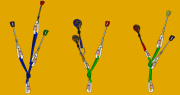
Advanced Trad Anchors > Minimal Gear Anchors The following minimal gear anchors are great to know in case you reach the top of a pitch without a cordelette, only a meter of rope to spare…
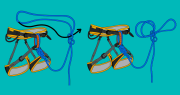
Advanced Trad Anchors > The Equalizing Figure-8 In Trad Climbing Basics, we described methods of building an equalized anchor without the use of slings or a cordelette – great if you’ve used them all during…
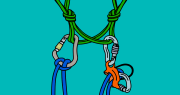
Advanced Trad Anchors > The Quad Anchor The ‘Quad Anchor’ is an anchor system which self-adjusts to keep an equal force on each anchor point. It can be better than other methods of equalizing in…
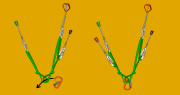
Advanced Trad Anchors > The Sliding-X AdvantagesThe main advantage of using a self-equalizing anchor is that it continues to distribute the load equally between the anchor pieces as the loading direction changes. This maintains a…
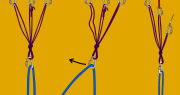
Advanced Trad Anchors > Getting Perfect Equalization In Trad Climbing Basics, we introduced various methods of creating belay master points by tying an overhand knot in a sling or cordelette. These methods are safe, simple…