
Advanced Trad Anchors > Minimal Gear Anchors
Advanced Trad Anchors: Minimal Gear Anchors The following minimal gear anchors are great to know in case you reach the top of a pitch without a cordelette, only a meter of rope to spare and…
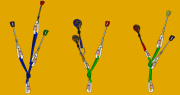
Advanced Trad Anchors: Minimal Gear Anchors The following minimal gear anchors are great to know in case you reach the top of a pitch without a cordelette, only a meter of rope to spare and…
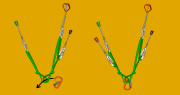
Advanced Trad Anchors: The Sliding-X Self-Equalizing Trad Anchors Advantages The main advantage of using a self-equalizing anchor is that it continues to distribute the load equally between the anchor pieces as the loading direction changes….
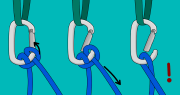
Attaching to the Anchor – Slings, Daisy Chains and Common Mistakes The Top Shelf To free up space at the central point, you can clip in to the ‘top shelf’ of the cordelette. This is…

Extending Climbing Gear Extending climbing gear with a sling, quickdraw or extendable quickdraw has advantages in certain situations. The disadvantages are fairly minor: you’ll have to carry extra slings/quickdraws, it’ll take a little extra time…

Nylon or Dyneema Slings? Nylon Climbing Slings Usually around 16-20mm wide, nylon climbing slings are much bulkier (and more durable) than lightweight 6-14mm Dyneema slings. This makes them the best choice for situations such as…
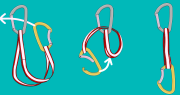
Extendable Quickdraws Extendable quickdraws (or alpine draws) are usually made from a 60cm sling and two snap gate carabiners. They can be used either as a short draw or fully extended, meaning it’s quick and…

Trad Climbing Gear: Slings Climbing slings are strongly-sewn loops of nylon or dyneema tape. They’re available in a range of lengths – your typical trad rack will have 60cm, 120cm and maybe a 240cm length…

Rock Climbing Knots: The Water (Tape) Knot The water (tape) knot is useful for joining flat or tubular webbing of equal width. How to Tie the Water Knot Step 1Tie a loose overhand knot near…
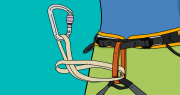
Rock Climbing Knots: The Girth Hitch The Girth Hitch (sometimes called Larks Foot) is used for:– Attaching slings to your belay loop– Attaching slings together How to Tie a Girth Hitch Step 1Feed a sling…