
Safe Simul Climbing
Safe Simul Climbing Simul climbing is a technique where all climbers move at the same time while tied into the same rope. Protection is placed by the first climber and removed by the last. This…
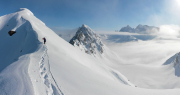
Safe Simul Climbing Simul climbing is a technique where all climbers move at the same time while tied into the same rope. Protection is placed by the first climber and removed by the last. This…
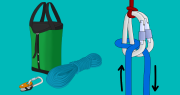
Improvised Hauling * This article is about using improvised basic hauling techniques while trad climbing. To learn more about hauling on big walls, see our article here. Hauling a bag on a separate rope can…
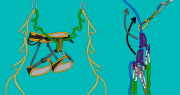
Improvised Aid Climbing * This article is about using improvised basic aid techniques while trad climbing. To learn more about aid climbing on big walls, see our articles here. Using protection pieces as hand or…
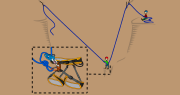
Leading > Pendulums and Tension Traverses Pendulums and tension traverses are great techniques for moving sideways across a section which is too difficult to climb. A pendulum involves swinging across the wall to reach a…

Climbing on Loose Rock and Runout Routes Accidents involving loose rock fall into three main categories:1) Belayers being hit by rocks from the leader2) Leaders falling because they held/ stood on loose rock3) Being hit…
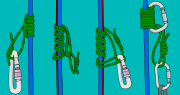
Prusik Knots > Different Types Explained A prusik (also known as a friction hitch) is a short piece of cord which can be wrapped around your climbing rope to add friction. They can slide up…
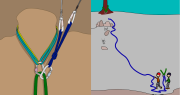
Abseiling > Bad Anchors and Loose Rock Poor abseil anchors are often found on seldom travelled multi-pitch descents or alpine ridge traverses. Sometimes there is no anchor where you need one, or the existing anchor…
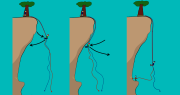
Abseiling > Pendulums Multi-pitch descents are not always straightforward. The next abseil station may be far to the side of the previous one (they often are when descending loose ground). Or maybe you need to…

Abseiling > How To Increase Friction Whether you’re abseiling down a skinny rope at the sport crag, or retreating down a multipitch with rain-slicked ropes and a heavy pack, the following techniques will help you…
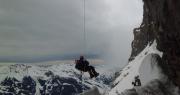
Abseiling > How to Deal with Stuck Ropes You try to retrieve your ropes after abseiling and they get stuck. What do you do? Stuck Ropes – Prevention If you are about to abseil down…

The Carabiner Brake – How To Abseil Without a Device Dropping your belay device at the top of a ten-pitch abseil descent isn’t recommended. But if you do, knowing how to use the carabiner brake…
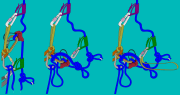
Abseiling > How To Abseil Past a Knot Times when you might need to abseil past a knot:– When descending a single strand ‘fixed’ rope, where a knot has been tied to isolate a damaged…

Abseiling > How To Abseil with a Damaged Rope If you climb long enough, you will inevitably end up having to abseil with a damaged rope at some point. Unfortunately, getting a core-shot (when the…
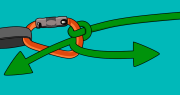
The Munter Hitch > How To Belay Without a Belay Device Uses:– Belaying without a belay device– Abseiling without a belay device– Creating a releasable knot when escaping the belay The munter hitch tends to…
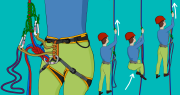
Self Rescue > Prusiking Up a Rope Knowing how to prusik up a rope transforms a potential epic into a mere inconvenience. This article explains how to ascend a rope using prusiks, assuming that you…
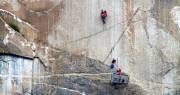
Self Rescue > Rope Soloing Rope soloing is a technique where you belay yourself instead of being belayed by your partner. You can use this technique to lead or top rope belay. More complicated techniques…
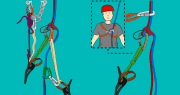
Self Rescue > Tandem Abseiling Tandem abseiling means two people descending with the same device. It is most useful when descending with an injured climber. A simple tandem abseil setup:– ‘Lead’ abseiler is attached to…
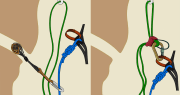
Self Rescue > Mid-Pitch Retreat Sometimes, a climb may prove to be too difficult, forcing you into a mid-pitch retreat. This is fairly straightforward if you:– Can downclimb– Are less than half a rope length…
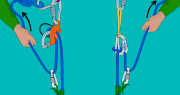
Self Rescue > Hauling Your Partner This section describes methods of hauling your partner up part of a climb. Times when you may need to set up a hauling system include:– Assisting your partner through…
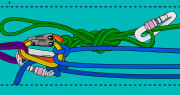
Self Rescue > Escaping the Belay The belay escape is a technique whereby the belayer frees themselves from the responsibilities of belaying. This fundamental skill is necessary for many rescue situations. Situations when you may…
Self Rescue > Introduction Having a good knowledge of self-rescue skills is essential for any climber. The more effectively you are able to improve a poor situation (e.g; if you are able to escape the…

Trad Climbing > Accident Prevention The vast majority of climbing accidents are preventable. They typically happen due to a series of bad choices. A single bad decision is often not a problem – if you…
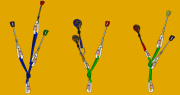
Advanced Trad Anchors > Minimal Gear Anchors The following minimal gear anchors are great to know in case you reach the top of a pitch without a cordelette, only a meter of rope to spare…
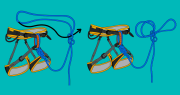
Advanced Trad Anchors > The Equalizing Figure-8 In Trad Climbing Basics, we described methods of building an equalized anchor without the use of slings or a cordelette – great if you’ve used them all during…
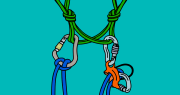
Advanced Trad Anchors > The Quad Anchor The ‘Quad Anchor’ is an anchor system which self-adjusts to keep an equal force on each anchor point. It can be better than other methods of equalizing in…
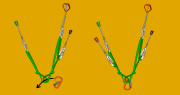
Advanced Trad Anchors > The Sliding-X AdvantagesThe main advantage of using a self-equalizing anchor is that it continues to distribute the load equally between the anchor pieces as the loading direction changes. This maintains a…
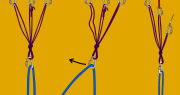
Advanced Trad Anchors > Getting Perfect Equalization In Trad Climbing Basics, we introduced various methods of creating belay master points by tying an overhand knot in a sling or cordelette. These methods are safe, simple…
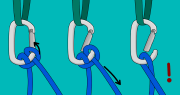
Attaching to the Anchor – Slings, Daisy Chains and Common Mistakes Attaching to the Anchor: The Top Shelf To free up space at the central point, you can clip in to the ‘top shelf’ of…
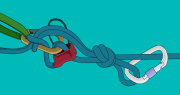
The Mule Overhand Knot > How To Tie-Off a Belay Device When belaying with a standard belay device, you obviously can’t let go of the rope. But sometimes it’s really useful to have both hands…
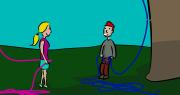
How To Be a Better Belayer Just as people pick up ‘bad habits’ after they pass their driving test, climbers often get lazy with belaying once they have learnt the basics. Here are some tips…
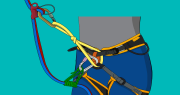
Extending a belay device can be a lifesaver on tricky multi-pitch abseils. This article explains how to extend a belay device.

Abseiling (or rappelling) is a technique used to descend climbing ropes. This article explains how to attach yourself to the anchor, and abseil with an ATC.
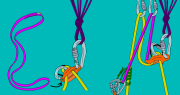
How To Belay In Guide Mode Guide Mode is an auto-locking belay technique. It is a safe way for the leader to bring up the second. Do not use this method for lead belaying. How…
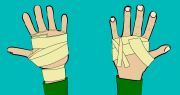
Crack Climbing > How To Make Tape Gloves Tape gloves protect your hands when crack climbing. There are many different ways to make tape gloves. The method described below provides a durable glove which protects…
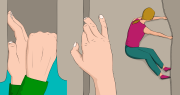
Crack Climbing Technique Cracks are often very striking lines. It’s no surprise that many classic routes follow crack systems. Some climbs have short crack sections which offer the security of a solid jam and the…
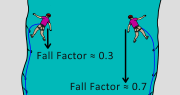
Fall Factors and kN Ratings: What They Actually Mean kN ratings are shown on all your climbing gear: nuts, cams, slings and carabiners. kN stands for kilo Newtons. 1kN is about 100kg (220lbs for the Americans)….
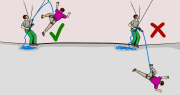
Multi-Pitch Trad Climbing A multi-pitch route is one that is split into two or more pitches. This may be because it is longer than your rope. Or it could be a wandering route that would…
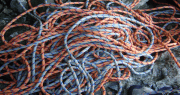
How To Use Half (Double) Ropes Half ropes (also known as double ropes) are thinner than normal ‘single’ ropes, and are designed to be used as a pair. Best Situations to Use Half Ropes– When…
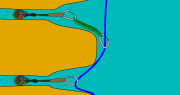
Extending Climbing Gear Extending climbing gear with a sling, quickdraw or extendable quickdraw has advantages in certain situations. The disadvantages are fairly minor: you’ll have to carry extra slings/quickdraws, it’ll take a little extra time…
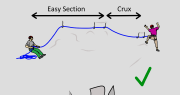
Leading Trad > When To Place Gear Trad gear is normally placed in cracks, behind flakes and around blocks. The important thing to remember is that these features are weaknesses in the rock. Some of…

Trad Anchors – How To Set up a Top Rope With the security of an anchored rope above, top-roping is the safest way to climb. A top-roped climber can rest on the rope whenever they…
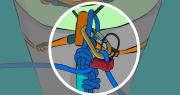
Trad Anchors – Belaying the Follower Belaying from an Anchor Once you’ve climbed a pitch and built an anchor, you will need to belay your partner up. Pull up all the slack rope in the…
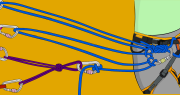
Trad Anchors – Attaching to the Anchor You’ll need to attach yourself to the anchor in a way that you can see your partner as they follow the pitch and brace yourself if they fall….
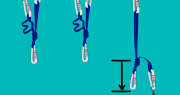
Trad Anchors – Equalizing Gear Let’s assume you’ve got two incredibly good pieces of gear or two bolts at the anchor. The easiest way to equalize them together is by using a long (120cm or…
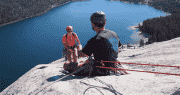
Trad Anchors – Introduction The climb isn’t over when you reach the top. You still need to make an anchor to attach yourself and belay your partner from. You should produce an anchor with at…

Nylon or Dyneema Slings? Nylon Climbing Slings Usually around 16-20mm wide, nylon climbing slings are much bulkier (and more durable) than lightweight 6-14mm Dyneema slings. This makes them the best choice for situations such as…
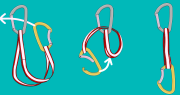
Extendable Quickdraws Extendable quickdraws (or alpine draws) are usually made from a 60cm sling and two snap gate carabiners. They can be used either as a short draw or fully extended, meaning it’s quick and…
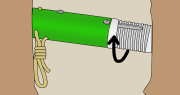
Trad Climbing Gear > Big Bros Big Bros are expandable tubes which protect wide cracks. They are lighter and more compact than large cams but are harder to place, cannot be shuffled up the crack…
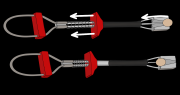
Trad Climbing Gear > Ball Nuts Ball nuts are a seldom used type of climbing gear which offer protection in thin cracks, filling the void where even the smallest cams are too big to fit….
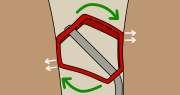
Learn how to place hexes; how to use them passively (like a nut) or actively so they cam into cracks. Learn how to place, remove and rack climbing hexes.
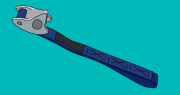
Trad Climbing Gear > Tricams Tricams work in a similar way to hexes; they can be placed in ‘passive’ mode like a nut, and also in ‘active’ mode. When a tricam is weighted in active…
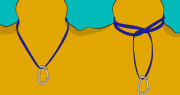
Trad Climbing Gear > Slings Climbing slings are strongly-sewn loops of nylon or dyneema tape. They’re available in a range of lengths – your typical trad rack will have 60cm, 120cm and maybe a 240cm…
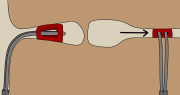
Nuts are an essential for every trad climber. This article explains everything about using climbing nuts: placing, racking and removing them.
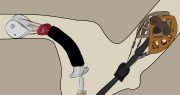
Learn how to place climbing cams. This article explains the physics of how climbing cams work, and also how to place, remove and rack them.
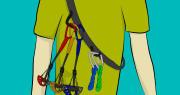
In addition to the gear you use in an indoor wall or at a sport crag, you’ll need some more specialist kit to climb a trad route. This article explains all.

Climbing Helmets A climbing helmet is the first thing you should buy when you start trad climbing. They protect your head from things falling on you (rocks, equipment, etc..) and also from your head hitting…
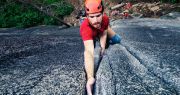
What Is Trad Climbing? Trad climbing is adventurous. When trad climbing, the leader must place their own gear in the rock. Typically, there are no pre-existing bolts. To be safe when trad climbing, the leader…