
How To Climb a Big Wall > Leading
How to Climb a Big Wall: Leading The Lead Climbing Setup Step 1 – On Belay Before you leave the belay (or ground), you’ll need to get set up for the lead. Both climbers tie…
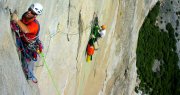
How to Climb a Big Wall: Leading The Lead Climbing Setup Step 1 – On Belay Before you leave the belay (or ground), you’ll need to get set up for the lead. Both climbers tie…
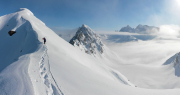
Safe Simul Climbing What is Simul Climbing? Simul climbing is a technique where all climbers move at the same time while tied into the same rope. Protection is placed by the first climber and removed…
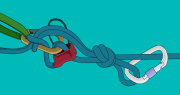
The Mule Overhand Knot: How to Tie-Off a Belay Device When belaying with a standard belay device, you obviously can’t let go of the rope. But sometimes it’s really useful to have both hands free….
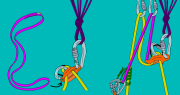
How to Belay in Guide Mode Guide Mode is an auto-blocking belay technique. It is a safe way for the leader to bring up the follower. Do not use this method for lead belaying. The…
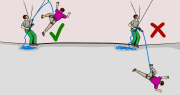
Multi-Pitch Trad Climbing A multi-pitch route is one that is split into two or more pitches. This may be because it is longer than your rope. Or it could be a wandering route that would…
How to Use Half (Double) Ropes Half ropes (also known as double ropes) are thinner than normal ‘single’ ropes, and are designed to be used as a pair. Best Situations to Use Half Ropes– When…
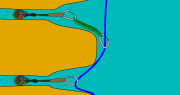
Extending Climbing Gear Extending climbing gear with a sling, quickdraw or extendable quickdraw has advantages in certain situations. The disadvantages are fairly minor: you’ll have to carry extra slings/quickdraws, it’ll take a little extra time…
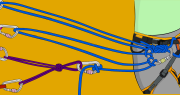
Trad Anchors: Attaching to the Anchor You’ll need to attach yourself to the anchor in a way that you can see your partner as they follow the pitch and brace yourself if they fall. Make…
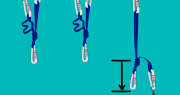
Trad Anchors: Equalizing Gear The Basics Let’s assume you’ve got two incredibly good pieces of gear or two bolts at the anchor. The easiest way to equalize them together is by using a long (120cm…
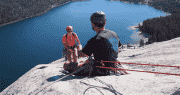
Trad Anchors: Introduction The climb isn’t over when you reach the top. You still need to make an anchor to attach yourself and belay your partner from. You should produce an anchor with at least…
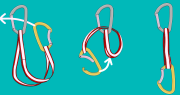
Extendable Quickdraws Extendable quickdraws (or alpine draws) are usually made from a 60cm sling and two snap gate carabiners. They can be used either as a short draw or fully extended, meaning it’s quick and…
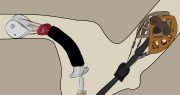
Learn how to place climbing cams. This article explains the physics of how climbing cams work, and also how to place, remove and rack them.
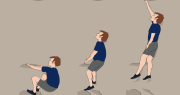
Climbing Technique: Movement Climbing is like a dance. The aim is to choreograph different types of holds and moves into one fluid movement. It is much more efficient and enjoyable to move up fluidly, methodically…
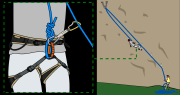
Sport Climbing – How to Descend Lower, Abseil or Walk Off? There are basically three ways to descend; walk off, lower or abseil (rappel). You will either lower or abseil to get down from most…
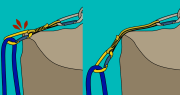
Sport Climbing – Lead Skills Lead climbing a sport route is similar to lead climbing at the indoor wall, but with a few more factors to consider. These are described below. Quickdraw Ends Quickdraws have…
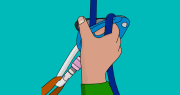
How To Belay with a GriGri Belaying at the crag is more difficult than belaying indoors. Uneven ground, falling rocks, strong sunlight, wind, insects, stray children and dogs are just some of the factors which…
How to Lead Climb Before Lead Climbing Before you lead climb, there are 3 other things you need to do which you wouldn’t do if top roping:1) Stack the rope2) Close the system3) Attach quickdraws…